
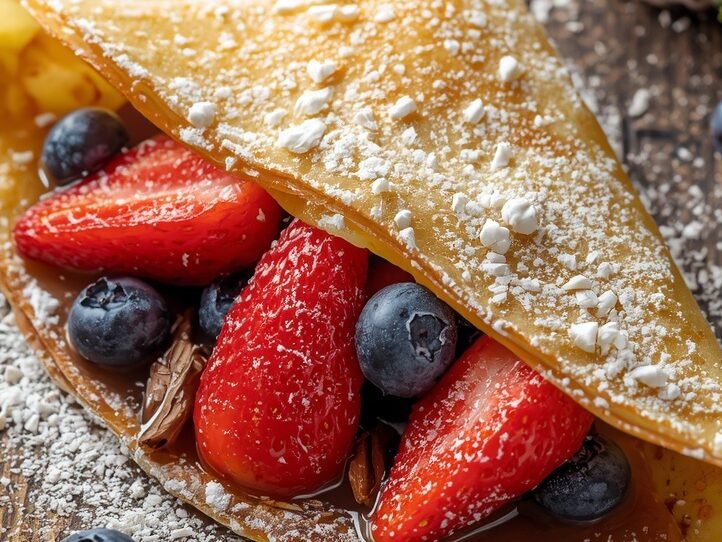
A crepe is more than just a thin pancake — it’s a versatile blank canvas that allows you to create everything from elegant breakfast crepes to sweet dessert wraps or savory dinners. In this article, you’ll discover an easy crepe recipe that delivers consistent results, along with tips, variations, and troubleshooting advice to ensure your crepes come out perfect every time.
You might have tried making crepes before, only to end up with thick, rubbery discs or batter that sticks to the pan. That frustration is common — but it doesn’t have to be your story. I’ve been there too, and this step-by-step guide will help you master the art of crepe making with simple techniques and expert tips.
Learning to make crepes unlocks a world of culinary possibilities: they work perfectly for breakfast, brunch, lunch, dinner, or dessert. Fill them with sweet berries and whipped cream, or savory combinations like cheese and mushrooms — the choice is yours. Quick, elegant, and endlessly customizable, crepes are a skill worth mastering.
Originating from Brittany, France, crepes carry a rich tradition but have also evolved into trendy fusion dishes worldwide. Whether it’s the classic French crêpe bretonne or the modern Japanese mille crepe cake, crepes have captured hearts and food feeds alike.
Scroll down to find the full recipe, detailed instructions, creative filling ideas (including vegan and gluten-free options), storage tips, and an FAQ to troubleshoot common crepe problems. Try your first crepe tonight — and don’t forget to pin this guide for easy access!
What Is a Crepe? (Understanding the Basics)
Definition & Origin
A crepe is a thin pancake from Brittany, France, made from a simple batter of flour, eggs, milk, butter, and salt. This delicate dish is prized for its thin, tender texture that sets it apart from thicker pancakes.
Crepes come in two main varieties: sweet crêpes (crêpes sucrées) and savory crêpes, often called galettes in Brittany. The savory versions traditionally use buckwheat flour, which originated from the poor soil conditions in Brittany’s northwest region. This buckwheat galette remains a beloved regional specialty, while wheat-based crepes evolved into the lighter, sweet versions we often enjoy globally today.
Ingredients & Essential Ratios
The key ingredients for crepes are simple:
- Flour: All-purpose is most common; buckwheat flour is traditional for savory galettes.
- Milk: Whole, low-fat, or plant-based alternatives like almond or oat milk.
- Eggs: Bind the batter and add richness.
- Melted butter or oil: Adds flavor and prevents sticking.
- Salt: Balances flavor.
- (Optional) Sugar and vanilla for sweet crepes.
The ideal batter ratio is roughly:
1 cup flour : 1 to 1¼ cups liquid (milk or milk + water)
This ratio creates a thin batter that spreads easily but isn’t too watery. A thinner batter produces lighter, more tender crepes, while a thicker one makes denser, pancake-like results.
To ensure smoothness, sift your flour before mixing, whisk liquids gradually, and consider blending or shaking the batter in a jar to remove lumps. If after resting, the batter is too thick, thin it with a splash of milk; if too runny, add a bit more flour.
Equipment & Ideal Pan
To make perfect crepes, the right tools matter:
- A nonstick skillet or dedicated crepe pan with gently flared edges is ideal. The flat, shallow design helps you swirl batter evenly.
- Essential tools include a ladle (for portioning batter), a spatula (for flipping), and a whisk or blender (for mixing).
- For smooth batter, a blender or shaker jar can be very helpful.
- Some professionals use a billig — a traditional cast-iron griddle — but a good quality nonstick pan works well at home.
The pan shape and consistent medium-high heat ensure even browning and easy flipping without tearing.
Common Mistakes Beginners Make
Avoid these pitfalls to save frustration:
- Too thick batter: Leads to dense, chewy crepes instead of delicate, tender ones.
- Overmixing: Overdevelops gluten, making crepes tough.
- Wrong heat: Too hot burns the crepe; too low results in sogginess.
- Flipping too early: Crepes tear if flipped before the edges lift.
- Skipping rest time: Resting allows flour to hydrate and gluten to relax, giving better texture.
Step-by-Step Crepe Recipe (Easy Process)
Preparing the Batter
Whisk together the flour, eggs, milk, melted butter, and salt until you get a smooth, lump-free batter. For sweet crepes, add sugar and vanilla extract.
Let the batter rest for at least 30 minutes (or up to several hours in the fridge). This resting period hydrates the flour and relaxes gluten strands, resulting in thinner, more tender crepes.
Before cooking, gently stir the batter. If it has thickened too much, add a splash of milk.

Cooking Technique
- Preheat your pan over medium-high heat until it’s hot but not smoking. A drop of water should sizzle and evaporate quickly.
- Pour the batter: Use a ladle (about ⅓ cup) to pour batter into the center of the pan.
- Swirl immediately: Tilt and rotate the pan to spread the batter into a thin, even layer covering the surface.
- Cook for 20–30 seconds until the edges start to lift and the underside is lightly golden.
- Flip carefully using a spatula, and cook for another 10–15 seconds on the other side.
Timing is key — cook too long, and crepes become crispy; too short, and they’ll be sticky or doughy.

Troubleshooting Issues
- Crepe too thick or dry: Thin your batter with extra milk and reduce flour.
- Crepe sticks: Ensure pan is preheated and lightly greased with butter or oil before each crepe.
- Uneven browning: Rotate the pan during cooking or adjust burner heat.
- Edges burn quickly: Lower the heat slightly or reduce cooking time.
Testing & Perfecting
Make a test crepe first. Check thickness, texture, and browning. Adjust your batter’s consistency or the pan’s heat accordingly before cooking the entire batch.
Variations & Fillings (Sweet, Savory & Special Diets)
Sweet Crepe Preferences
Popular sweet fillings include:
- Nutella and sliced bananas
- Fresh berries and whipped cream
- Lemon juice and sugar
- Chocolate sauce and powdered sugar
Try adding cinnamon or orange zest to the batter for extra flavor.

Savory Crepes & Buckwheat Version
For savory crepes (galettes):
- Fill with cheese, ham, spinach, sautéed mushrooms, or eggs.
- Use buckwheat flour for a gluten-free and traditional twist — especially in Brittany, where it’s a staple.
Buckwheat adds an earthy flavor and hearty texture, perfect for robust fillings.
Vegan / Gluten-Free Alternatives
Make crepes vegan by substituting:
- Plant-based milk (almond, soy, oat)
- Flaxseed or chia eggs (1 tbsp ground seeds + 3 tbsp water per egg)
- Gluten-free flours such as rice or oat flour, or a mix
Tip: Add a little xanthan gum or guar gum to improve texture when using gluten-free flour.

Trendy / Fusion Ideas
- Asian-inspired crepes with fillings like kimchi, teriyaki chicken, or spicy tofu
- Dessert mashups like mille crepe cake layers or crepe sundaes
- Savory crepe bowls with fresh herbs and spicy sauces
Tips, Storage & Serving (Make It Practical)
Serving & Presentation Ideas
Fold crepes into triangles, roll them, or stack layers with filling in between. Garnish with powdered sugar, fresh herbs, or sauces for eye-catching presentation — perfect for Pinterest or Instagram.
Make-Ahead, Storing & Reheating
- Store cooked crepes in the fridge stacked with parchment paper between each to prevent sticking.
- Freeze crepes wrapped tightly in foil or plastic wrap for up to 2 months.
- Reheat gently in a pan or microwave covered with a damp paper towel to retain moisture.
Scaling and Batch Cooking
To serve more guests, double or triple the batter while keeping ratios consistent. Save some batter aside to adjust thickness later if needed.
Pairings & Side Dishes
Crepes pair beautifully with:
- Fresh fruit salad
- Coffee, tea, fresh juice, or sparkling water
- Light salads or roasted vegetables for savory crepes
FAQs & Troubleshooting Your Crepe Questions
Why Did My Crepes Tear?
Common causes include flipping too early, batter that’s too thin or too thick, or overcooking. Let edges lift naturally before flipping and adjust batter consistency.
Can I Make Crepes Ahead / Freeze Them?
Yes! Store in an airtight container in the fridge or freeze for long-term storage. Thaw frozen crepes overnight in the fridge and reheat gently.
How to Make Crepes Without Eggs or Dairy?
Use plant-based milk and flax/chia egg substitutes. Add a bit of oil for richness. Gluten-free flours may require additional binding agents.
Which Flour Is Best: All-Purpose, Buckwheat, Gluten-Free?
- All-purpose: Most versatile, neutral flavor.
- Buckwheat: Earthy, hearty, traditional for savory galettes.
- Gluten-free: Use rice, oat, or mixed gluten-free flours with gums for texture.